
A journey between two worlds: the Black Desert and the White Desert… Egypt’s timeless natural landscape. Deep in Egypt’s Western Desert, where the horizon stretches endlessly and the sands embrace the sky in eternal silence, the earth pulsates with an ancient secret. There, in that unique region, the Black Desert and the White Desert stand as two opposing symbols of beauty, history, and geography, as if they were night and day in a single desert. A single journey between them is enough to take you back thousands of years, to witness how nature crafted from fire, stone, and sand the most magnificent painting known to man on the land of Egypt.
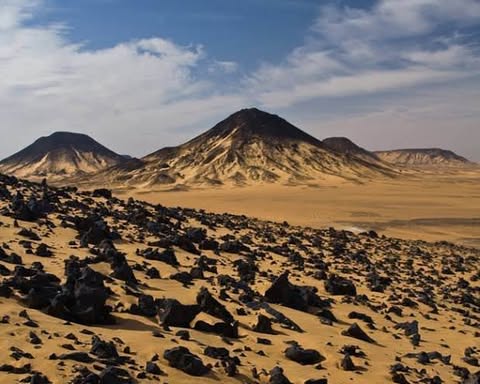
The Black Desert… When volcanoes awoke in the heart of the desert About 50 kilometers from the Bahariya Oasis, the Black Desert extends over a vast area covered with dark hills and conical mountains, topped with a blanket of shiny black rocks.
The scene may appear mysterious at first glance, as if you’re walking through land scorched by fire. However, scientific fact tells us that these black sands are nothing but the remains of ancient volcanic eruptions that occurred millions of years ago, when this region was seething with molten lava.
Volcanic basalts covered the surface of the earth here and then cooled over time, leaving behind this dark color that gave the place its name and distinctive identity.
Each of these small mountains is in fact an extinct volcano, seen today, still after spewing lava in ancient geological eras.
English Mountain is one of the most famous landmarks of the Black Desert. It was given this name because a twentieth-century British explorer used it as an observation point while studying the area. From its summit, visitors can see a stunning panoramic view, where the black color extends to the horizon, as if the sand has turned into a sea of volcanic coal glittering under the sun
.An Adventure in the Heart of the Black Desert
Visiting the Black Desert isn’t just a geographical journey; it’s a spiritual experience that makes you feel as if you’re traversing the early ages of the Earth. As you wander among the volcanic hills and witness the contrast between the golden sands and the dark black patches, you realize you’re walking on land that witnessed great explosions, then subsided to lie in eternal silence. Many adventurers prefer to set off from Cairo to the Bahariya Oasis, then head in four-wheel-drive vehicles toward the Black Desert early in the day, before the sun’s heat intensifies. There, you can climb one of the hills to watch the sunset, as the black sands take on stunning shades of golden orange, a sight described as one of the most beautiful in the Western Desert. At night, the silence is profound and the sky is clear, interrupted only by the twinkling stars that reflect off the black rocks, creating a rare cosmic landscape.
A Journey from Fire to Light: The Road to the White Desert After leaving the Black Desert and heading south toward the Farafra Oasis, the landscape begins to gradually change. The golden sands return to their light color, and then the white rocks begin to appear little by little, until you find yourself facing an unparalleled natural wonder in the world: the White Desert. The White Desert National Park is located about 45 kilometers from Farafra and spans an area of more than 3,000 square kilometers. This area was declared a nature reserve in 2002 for its unique and rare geological formations, considered among the most beautiful natural landscapes in Egypt and even the world.
The White Desert… When the sand turns into a dream of light
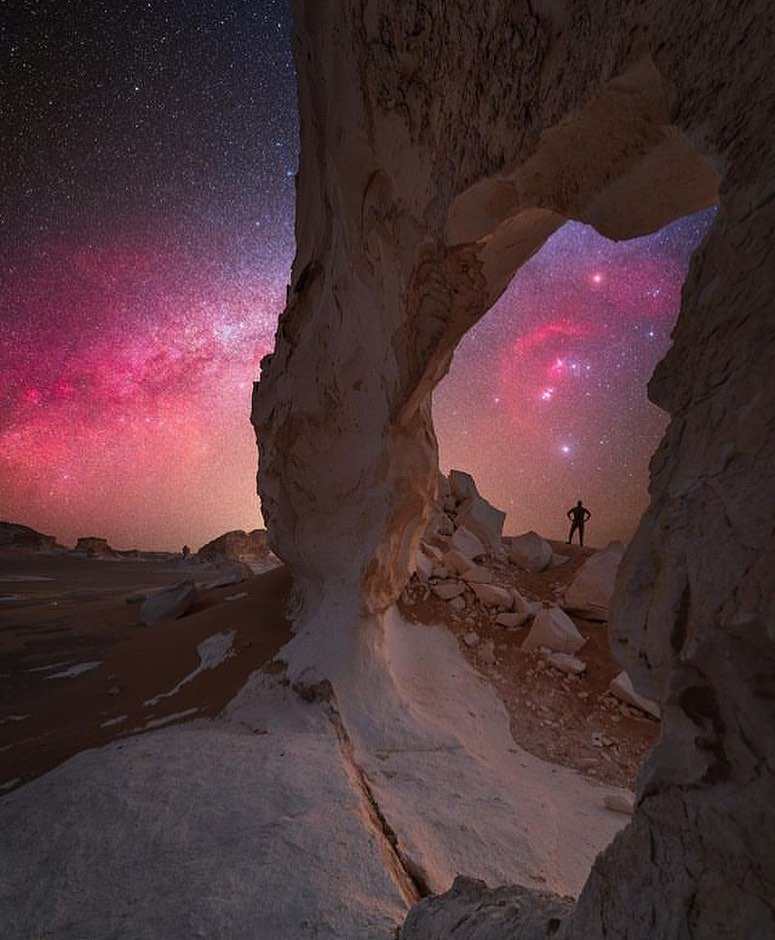
What makes the White Desert unlike any other place is its unique geological formation. It is composed of soft white limestone rocks formed over millions of years by wind and sandstorms. Nature has sculpted these rocks into strange and surprising shapes: massive columns, blocks resembling giant mushrooms, natural statues resembling birds and camels, and even human faces. When you walk through it during the day, the white glow that reflects the sun’s rays dazzles you, as if you’re walking through a world of snow. At sunset, the rocks transform into pink and gold paintings under the last rays of the setting sun. At night, the sands shimmer under the moonlight, making the desert appear like a sea of silver. That’s why some call it the “Moon Desert.”
A Night Under the Stars of the White Desert “White Desert Safari : 2 Day , 1- Night Camping Adventure from Cairo
Camping in the White Desert is an unforgettable experience. At sunset, the Bedouins pitch their tents and light a fire to prepare tea over embers. The sky begins to transform into a canvas of millions of glittering stars. The only sounds are the rustling wind and the crunching sand beneath your feet. It’s a moment of spiritual serenity, where visitors feel they’ve returned to the origins of life, far from the hustle and bustle of cities. Local Bedouins living in Farafra and the nearby oases tell ancient tales about the spirits of the desert and the days of their ancestors who crossed this land on camels centuries ago. Many visitors confirm that spending the night there makes them feel like they’re part of this timeless place.
Safaris from Cairo to the White Desert Most safaris from Cairo to the White Desert start early in the morning, passing through the Bahariya Oasis. Specifically equipped four-wheel-drive vehicles are used to cross the sand dunes, driven by experienced drivers who know the desert’s roads and hidden trails. The trip usually includes visits to the most important landmarks: The Black Desert and English Mountain. Ain El-Serw, a small oasis of fresh water in the middle of the desert. The Crystal Mountains, which contain sparkling natural crystals that reflect the sunlight in magical colors. Then, you arrive at the White Desert Reserve, where the most magical part of the adventure begins. These trips are among the most attractive activities for tourists in the Western Desert, combining adventure, relaxation, and contemplation of the beauty of nature.
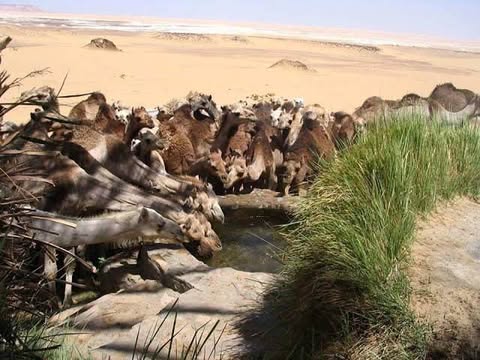
Farafra… An Oasis of Life in the Heart of the Desert Before reaching the White Desert, you pass through the Bahariya Oasis, one of Egypt’s most beautiful and tranquil oases. Farafra is famous for its green farms and natural springs. It also includes several small villages where Bedouins live a simple life in harmony with the rhythm of nature. The people are known for their hospitality and warm smiles, welcoming visitors with mint tea or Arabic coffee. Farafra is an ideal starting point for exploring the White Desert Reserve. From there, you can organize short or long trips, whether for a day or for an overnight stay in the heart of the desert under the stars.
A Historical Overview of the Western Desert . Throughout history, this desert has not merely been a barren land; it has been an important trade corridor since the time of the Pharaohs. The ancient Egyptians used the Western Desert roads to reach the oases of Dakhla, Kharga, and Farafra, which were sources of water, agriculture, and trade. Pharaonic inscriptions and drawings dating back thousands of years have also been found in these areas, depicting caravans crossing the desert carrying incense, gold, and animals. In later eras, the Western Desert became a trade route between Egypt, Sudan, and Libya, witnessing the passage of caravans carrying spices, salt, and ivory. Therefore, the White and Black Deserts cannot be viewed in isolation from human history; they are part of Egypt’s great story, from the time of the Pharaohs to the present day.
Nature’s Message: The Balance Between Black and White . Anyone contemplating the scene between the Black Desert and the White Desert realizes that nature intended to send an eternal message about balance in life. Between the blackness of the volcanic rocks and the whiteness of the limestone formations, the concept of cosmic harmony between opposites is embodied: fire and water, darkness and light, beginning and end. Your journey from Cairo to the White Desert is not just a tourist adventure; it’s a journey of self-discovery and contemplation of the Creator’s majesty in the simplest aspects of the earth. It’s an experience that combines science and beauty, history and spirituality, and makes everyone who visits realize that the desert is not a void, as some think, but rather a vibrant life of silence and grandeur.
Why should you visit the White and Black Deserts? Because they are among the rarest geological regions in the world. Because you’ll witness natural landscapes like never before. Because you’ll experience camping in the quietest place on Earth. Because you’ll learn about the authentic culture of the Egyptian Bedouins. And because, quite simply, they will make you fall in love with the desert and understand that beauty sometimes lies in simplicity and emptiness.
The Journey’s End… When Earth Meets Sky When your journey in the White Desert ends and you begin your journey back to Cairo, the scene will remain etched in your memory: Endless white sands, looming black mountains, a clear sky embracing the distant horizon, and a soft breeze reminding you that you were once at the heart of history and beauty together. Those are the White Desert and the Black Desert… They are not just two tourist destinations, but two chapters in Egypt’s eternal story, written by time in the sand. A journey from fire to light, from darkness to serenity, always reminding you that true beauty is not manufactured, but born from the womb of nature